
Rosemary Thyme No-Knead Dutch Oven Bread Recipe
Introduction
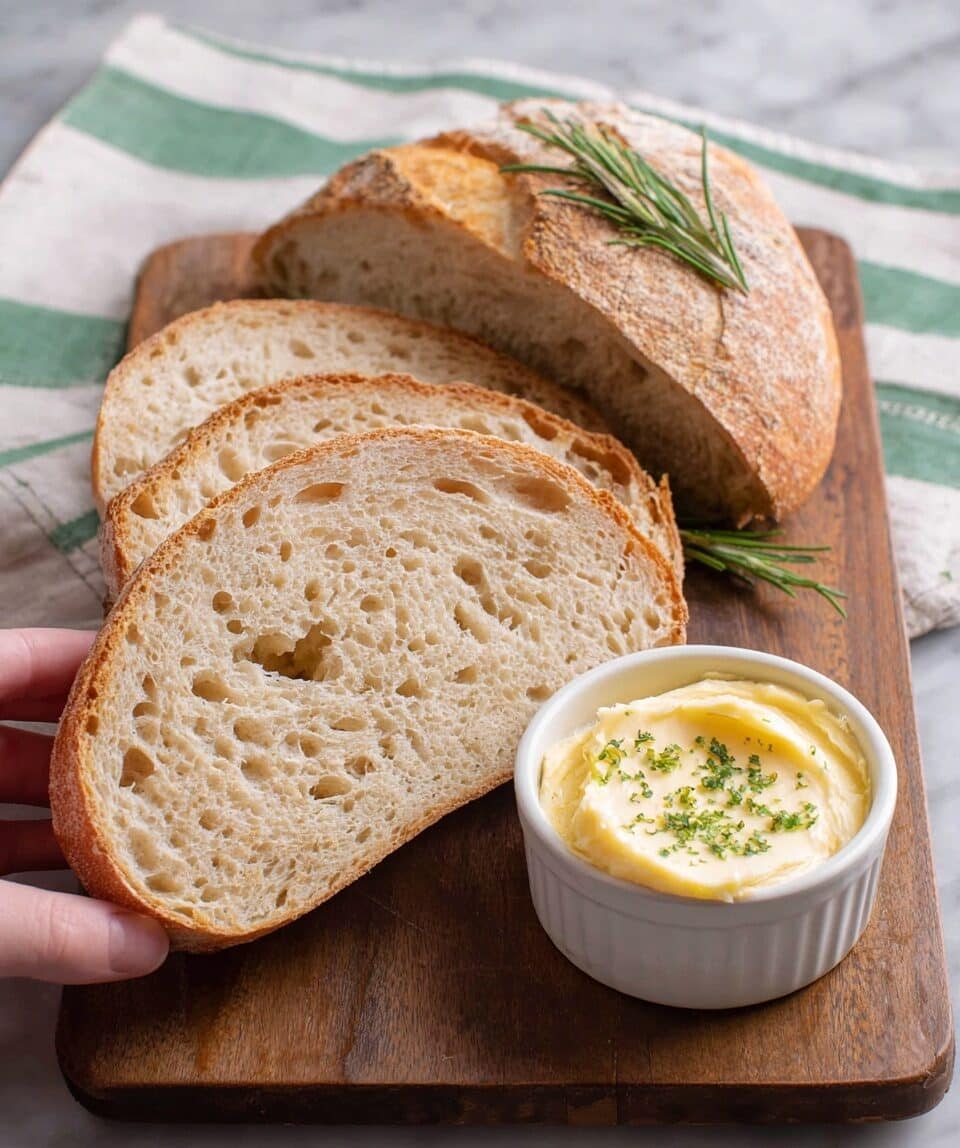
This Rosemary Thyme No-Knead Dutch Oven Bread is a fragrant, rustic loaf perfect for home bakers looking for simple yet flavorful bread. With fresh herbs and an easy, hands-off method, you’ll have a crusty, aromatic loaf with minimal effort.
Ingredients
- 3 cups all-purpose flour
- 1/2 tsp instant yeast
- 1 1/2 tsp salt
- 1 1/2 tbsp fresh rosemary, finely chopped
- 1 1/2 tbsp fresh thyme, chopped
- 1 1/4 cups room temperature water
- 1/4 cup olive oil
Instructions
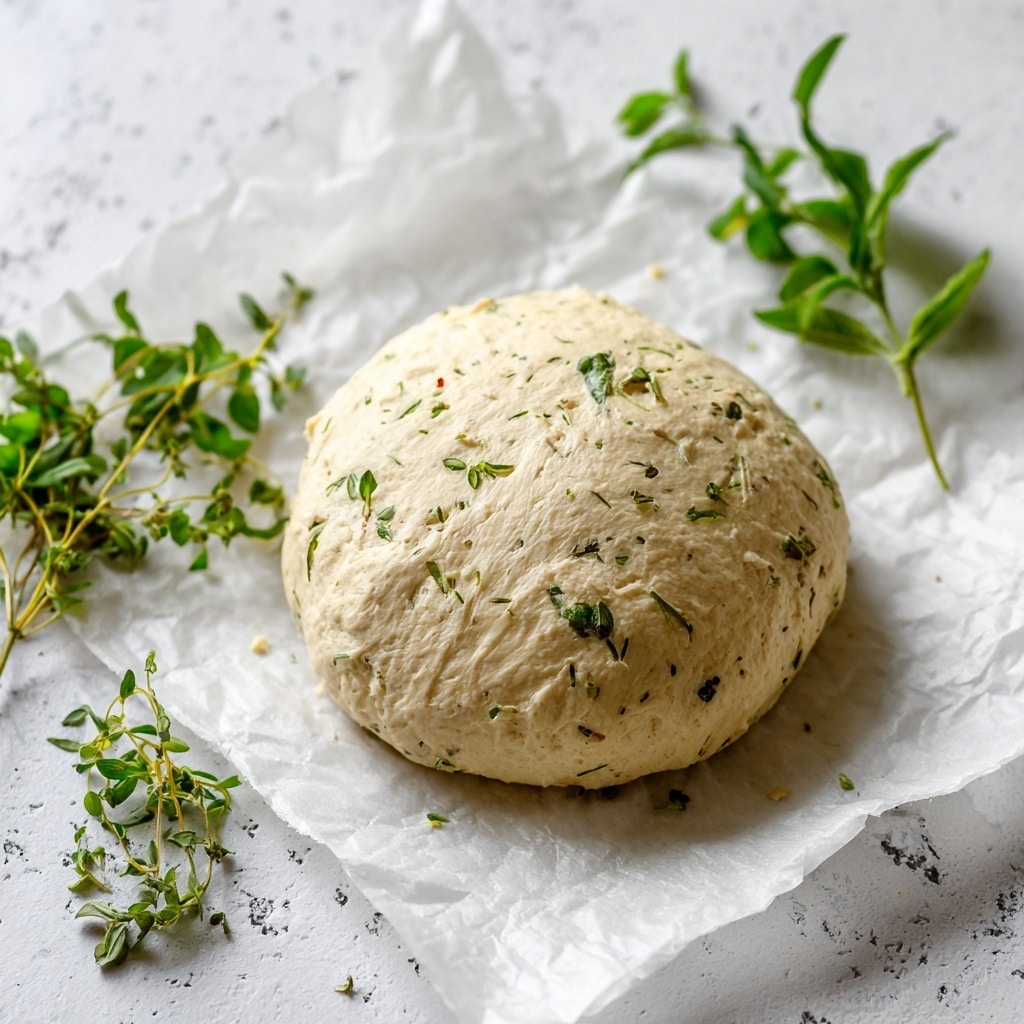
- Step 1: In a large bowl, combine flour, yeast, salt, rosemary, and thyme. Stir in water and olive oil with a wooden spoon until the dough is well-mixed and no dry flour remains; the dough will be wet and shaggy.
- Step 2: Cover the bowl with plastic wrap and let it rest in a warm spot for 10 to 18 hours, until the dough doubles in size and becomes puffy.
- Step 3: Dust a clean work surface with flour and turn the dough out onto it. Fold the dough over a few times to stabilize it, then gently stretch the top and tuck the ends underneath to form a ball.
- Step 4: Brush a piece of parchment paper with olive oil and place the dough on it. Cover with a damp kitchen or paper towel and let it rise in a warm place for 1 to 1 1/2 hours.
- Step 5: About 30 minutes before baking, place a large Dutch oven with its lid into your oven and preheat to 500°F (260°C). Ensure your pot and lid are oven-safe to this temperature.
- Step 6: Just before baking, use a serrated knife to cut one or more slits on top of the dough. This allows the bread to expand evenly and creates a beautiful crust.
- Step 7: Carefully remove the hot Dutch oven from the oven. Lift the dough with the parchment paper and place it into the pot. Cover with the lid and return it to the oven.
- Step 8: Reduce the oven temperature to 425°F (220°C) and bake the bread, covered, for 30 minutes.
- Step 9: Remove the lid and bake uncovered for an additional 15 minutes until the crust is deeply golden. Transfer the loaf to a wire rack to cool completely before slicing.
Tips & Variations
- For extra flavor, try adding a tablespoon of grated Parmesan or a teaspoon of garlic powder to the dough along with the herbs.
- If fresh herbs are not available, substitute with 1 teaspoon each of dried rosemary and thyme, but crush them slightly to release more aroma.
- Use bread flour instead of all-purpose flour for a chewier texture and higher rise.
- If you don’t have a Dutch oven, use any heavy, oven-safe lidded pot that can withstand high heat.
Storage
Store the bread in a paper bag or wrapped loosely in a kitchen towel at room temperature for up to 2 days. To keep it longer, slice and freeze the bread in an airtight bag for up to 1 month. Reheat slices in a toaster or warm in a 350°F (175°C) oven for 5–10 minutes to refresh the crust.
How to Serve
Serve this delicious recipe with your favorite sides.
FAQs
Can I use active dry yeast instead of instant yeast?
Yes, you can substitute active dry yeast but dissolve it in the water first and let it sit for 5–10 minutes until foamy before mixing it with the dry ingredients.
Why does the dough need to rest for so long?
The long resting time allows the yeast to ferment slowly, developing flavor and producing a light, airy crumb without needing any kneading.
PrintRosemary Thyme No-Knead Dutch Oven Bread Recipe

This Rosemary Thyme No-Knead Dutch Oven Bread is a fragrant and rustic artisan loaf, perfect for novice bakers looking for an easy homemade bread recipe. Infused with fresh rosemary and thyme, this bread has a crispy crust and a light, airy crumb. The no-knead method requires minimal effort and uses slow fermentation to develop flavor and texture, baking the loaf in a preheated Dutch oven to achieve a professional bakery-style crust and crumb.
- Prep Time: 20 minutes
- Cook Time: 45 minutes
- Total Time: 11 hours 5 minutes to 18 hours 5 minutes
- Yield: 1 medium loaf (about 10–12 servings) 1x
- Category: Bread
- Method: Baking
- Cuisine: American
- Diet: Vegetarian
Ingredients
Dry Ingredients
- 3 cups all-purpose flour
- 1/2 tsp instant yeast
- 1 1/2 tsp salt
- 1 1/2 tbsp fresh rosemary, finely chopped
- 1 1/2 tbsp fresh thyme, chopped
Wet Ingredients
- 1 1/4 cups room temperature water
- 1/4 cup olive oil
Instructions
- Mix Ingredients: In a large bowl, combine the flour, instant yeast, salt, rosemary, and thyme. Stir in the room temperature water and olive oil with a wooden spoon until the dough is well mixed and no dry flour remains. The dough should be wet and shaggy in texture.
- First Rise: Cover the bowl tightly with plastic wrap and place it in a warm spot in your kitchen. Allow the dough to rest and ferment for 10 to 18 hours until it doubles in size and becomes puffy.
- Shape Dough: Lightly flour a clean work surface and turn out the dough from the bowl. Fold the dough over itself a few times to stabilize it, then gather it into a ball by gently stretching the top and tucking the ends underneath.
- Second Rise: Brush a piece of parchment paper with olive oil. Place the shaped dough on the parchment paper and cover it with a damp kitchen towel or paper towel. Let it rise again in a warm spot for 1 to 1.5 hours until slightly puffed.
- Preheat Dutch Oven: Thirty minutes before baking, place a large Dutch oven with its lid inside your oven and preheat to 500°F (260°C). The pot must be oven-safe to handle high heat.
- Score the Dough: Just before baking, use a serrated knife to cut one or more slits in the top of the dough. These cuts allow the bread to expand during baking and create an attractive crust.
- Transfer to Dutch Oven: Carefully remove the hot Dutch oven from the oven. Lift the dough along with the parchment paper by its corners and lower it into the pot. Cover with the lid and immediately return it to the oven.
- Bake Covered: Reduce the oven temperature to 425°F (220°C) and bake the bread, covered, for 30 minutes to trap steam and develop a crispy crust.
- Bake Uncovered: Remove the Dutch oven’s lid and bake the bread for an additional 15 minutes uncovered to finish the crust development. Transfer the loaf to a wire rack and allow it to cool completely before slicing.
Notes
- Make sure your Dutch oven is oven-safe up to 500°F to avoid damage.
- If your oven runs cooler, you can still bake the bread successfully; it may just require slight timing adjustments.
- Scoring the dough helps control expansion and creates a decorative crust.
- Using fresh herbs gives the bread a fragrant aroma and flavor, but you can substitute dried herbs if needed (use about one-third the quantity).
- Let the bread cool completely on a wire rack before slicing to finish its internal cooking and avoid a gummy crumb.
Keywords: no-knead bread, rosemary bread, thyme bread, Dutch oven bread, artisan bread, easy bread recipe, homemade bread, no-knead no-fuss bread