Chuck Roast Burnt Ends Recipe
Introduction
Chuck Roast Burnt Ends are a smoky, tender delight that transforms a simple cut of beef into a flavorful barbecue treat. Slow-cooked to perfection, these bite-sized morsels are packed with rich, caramelized flavor that’s perfect for any gathering or cozy meal.
Ingredients
- 1 or 2 chuck roasts (totaling 3 to 4 pounds, cut into 1.5-inch cubes)
- 3 tablespoons kosher salt
- 2 tablespoons garlic powder
- 2 tablespoons black pepper
- 1 tablespoon smoked paprika
- 1 teaspoon chili powder
- 5 tablespoons unsalted butter (cut into small cubes)
- ¼ cup honey
- ½ to ¾ cup barbecue sauce (favorite BBQ sauce or homemade)
Instructions
- Step 1: Light a full chimney of charcoal. When the coals are ashed over, dump them on one side of the grill to create a hot zone. Leave the other side empty for indirect heat (cool zone). Close the lid and adjust vents to maintain a temperature of around 225–250°F.
- Step 2: For gas grills, turn on one side of the burners to medium heat, leaving the other side off. Close the lid and preheat to about 225–250°F.
- Step 3: Place an aluminum pan filled with water on the grill to help maintain moisture and stabilize temperature, preventing the meat from drying out during cooking.
- Step 4: Cut the chuck roast into 1.5-inch cubes, keeping sizes consistent for even cooking. Sprinkle the kosher salt, garlic powder, black pepper, smoked paprika, and chili powder evenly over the meat cubes.
- Step 5: Arrange the cubes on the cool side of the grill (indirect heat). Close the lid and smoke the meat at 225–250°F for 2 hours. The meat should develop a dark, smoky crust and reach an internal temperature of 160–170°F.
- Step 6: (Optional) Place the meat on a cookie rack set on the grill grates to prevent cubes from falling through.
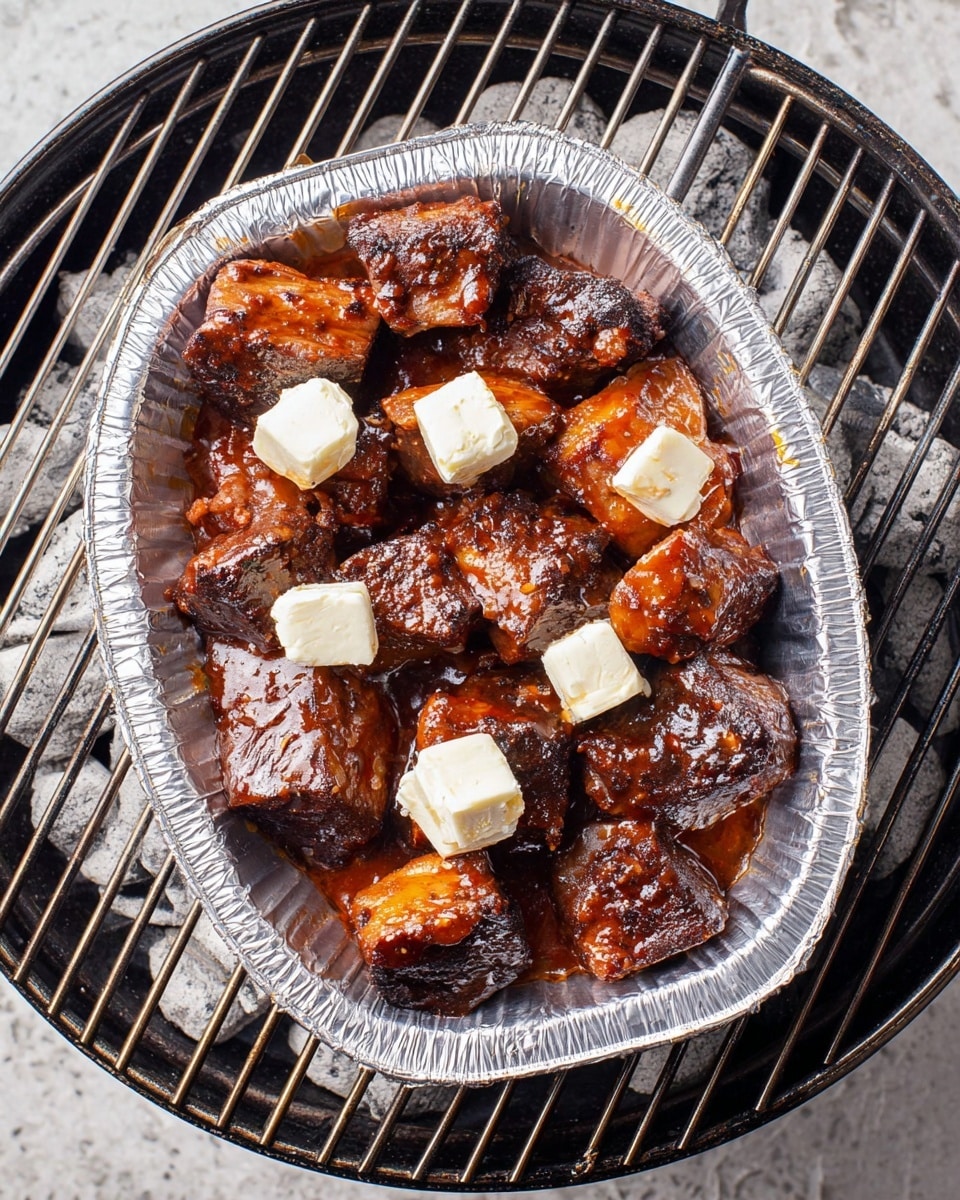
- Step 7: Transfer the meat cubes to an aluminum foil pan. Add butter cubes, honey, and ½ cup (or more) of barbecue sauce. Cover tightly with foil and return to the cool side of the grill. Cook for another 1.5 to 2 hours, or until probe tender and internal temperature reaches 200–205°F.
- Step 8: Remove the pan from the grill and let it rest, covered, for 20 to 30 minutes to allow juices to settle. Then uncover and gently stir the meat with the juices.
- Step 9: For extra glaze, spread a final layer of barbecue sauce over the burnt ends and return to the grill uncovered for 5 to 10 minutes. Serve hot directly from the pan with your favorite sides.
Tips & Variations
- Use a meat thermometer to monitor internal temperature for perfect tenderness.
- Try different barbecue sauces to customize the flavor, from spicy to sweet.
- Adding a bit of liquid smoke to the sauce can enhance the smoky flavor if you’re using a gas grill without wood chips.
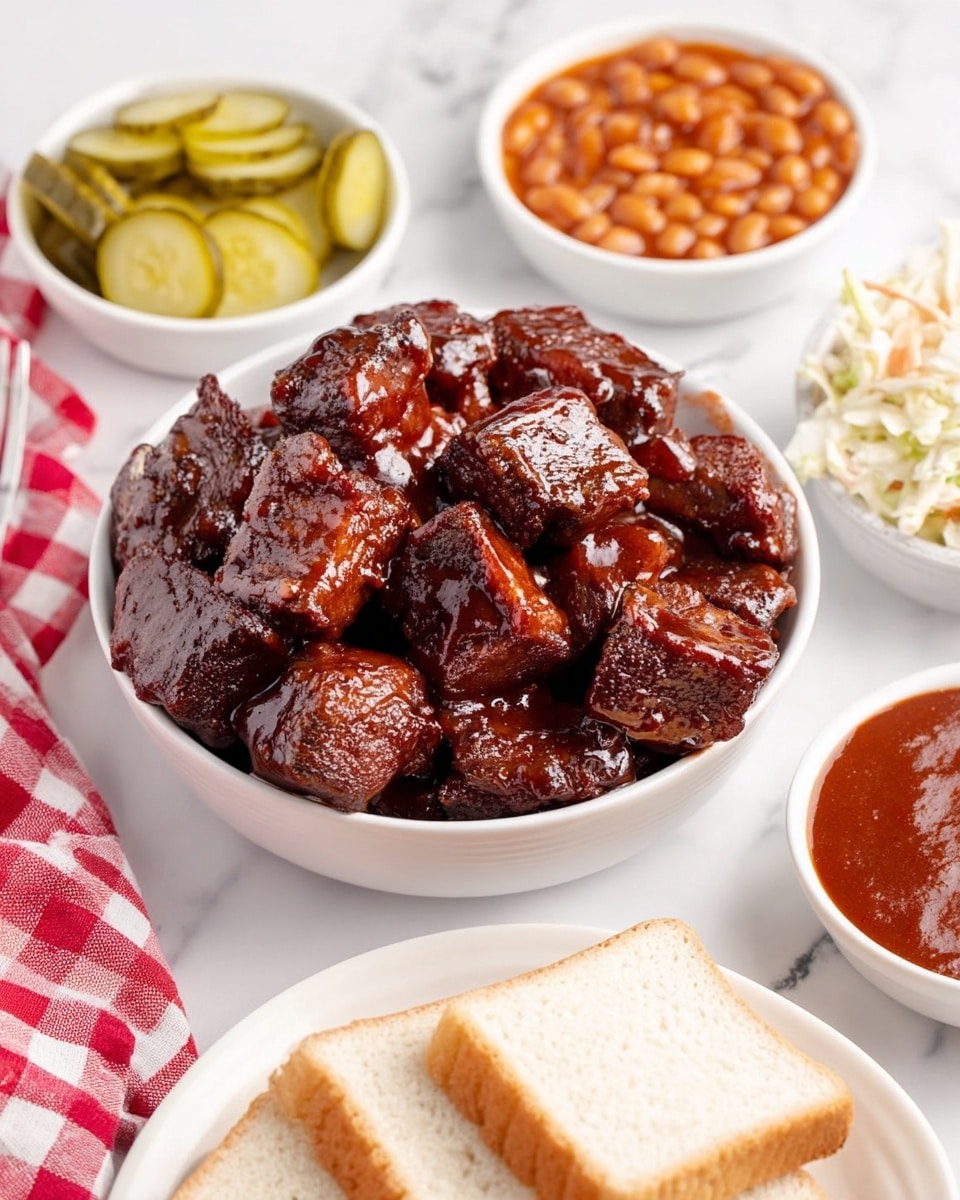
- Serve burnt ends with classic sides like coleslaw, mac and cheese, or on a sandwich for extra indulgence.
Storage
Store leftover burnt ends in an airtight container in the refrigerator for up to 3 days. To reheat, warm gently in the oven at 300°F covered with foil to retain moisture, or heat in a pan over low heat. Avoid microwaving to maintain the texture and flavor.
How to Serve
Serve this delicious recipe with your favorite sides.
FAQs
Can I use a different cut of meat for burnt ends?
Chuck roast is preferred for its marbling and tenderness, but brisket can also be used if cut into cubes. Pork shoulder is another option for a similar burnt ends style.
How do I keep the meat from drying out during the long cook?
Maintaining a steady low temperature and using an aluminum pan with water helps keep the grill environment moist. Wrapping the meat with butter, honey, and barbecue sauce also adds moisture and flavor during the second phase of cooking.
PrintChuck Roast Burnt Ends Recipe
This recipe for Chuck Roast Burnt Ends transforms a simple beef chuck roast into tender, smoky, and flavorful bite-sized pieces with a caramelized glaze. Slow-smoked on the grill over indirect heat, these burnt ends are coated in a savory BBQ rub, then basted with butter, honey, and barbecue sauce for a delectable finish. Perfect as a hearty main dish or a crowd-pleasing appetizer, these burnt ends pair wonderfully with classic Southern sides like coleslaw and mac and cheese.
- Prep Time: 20 minutes
- Cook Time: 4 hours
- Total Time: 4 hours 20 minutes
- Yield: 6 servings 1x
- Category: Main Course
- Method: Grilling
- Cuisine: American
Ingredients
Meat
- 3 to 4 pounds chuck roast, cut into 1.5-inch cubes
Rub
- 3 tablespoons kosher salt
- 2 tablespoons garlic powder
- 2 tablespoons black pepper
- 1 tablespoon smoked paprika
- 1 teaspoon chili powder
Glaze and Finishing
- 5 tablespoons unsalted butter, cut into small cubes
- ¼ cup honey
- ½ to ¾ cup barbecue sauce (favorite or homemade)
Instructions
- Prepare the grill: Light a full chimney of charcoal. When the coals are ashed over, push them to one side of the grill to create a hot zone, leaving the other side empty for indirect heat. Aim to maintain the grill temperature between 225-250°F by adjusting vents with the lid closed. For gas grills, turn on one side of the burners to medium heat and leave the other side off, preheating similarly.
- Set up moisture pan: Place an aluminum pan filled with water on the cool side of the grill to maintain humidity and stabilize temperature during cooking, preventing the meat from drying out.
- Prepare and season beef: Cut the chuck roast into evenly sized 1.5-inch cubes to ensure uniform cooking. Generously coat all cubes with the BBQ rub made from kosher salt, garlic powder, black pepper, smoked paprika, and chili powder.
- Smoke the beef cubes: Position the seasoned beef cubes on the cooler indirect heat side of the grill, ideally on a cookie rack placed over the grill grates to prevent pieces from falling through. Close the lid and smoke at 225-250°F for about 2 hours until the cubes develop a dark, smoky crust and an internal temperature of 160-170°F.
- Add glaze and continue cooking: Transfer the smoked beef cubes into an aluminum foil pan. Add 5 tablespoons of butter cubes, ¼ cup honey, and at least ½ cup barbecue sauce. Cover the pan tightly with foil and return it to the cool side of the grill. Cook for another 1.5 to 2 hours until the meat is probe tender and registers 200-205°F internally.
- Rest the burnt ends: Remove the foil pan from the grill while still covered and let the meat rest for 20 to 30 minutes to allow juices to redistribute and keep the meat tender. After resting, uncover and gently stir the meat with the accumulated juices.
- Final glaze and serve: For an extra glossy finish, brush a final layer of barbecue sauce over the burnt ends. Return the pan to the grill uncovered for 5-10 minutes to set the glaze. Serve the burnt ends hot directly from the pan, excellent alongside coleslaw, mac and cheese, or in a sandwich.
Notes
- Use a meat thermometer to accurately check internal temperatures for perfect tenderness.
- Maintaining consistent grill temperature between 225-250°F is key to slow smoking and tender results.
- Using a water pan increases moisture in the cooking environment, preventing the beef from drying out.
- Placing cubes on a cookie rack over the grill grates helps to avoid loss of meat pieces while smoking.
- Resting the burnt ends before final glazing enhances juiciness and tender texture.
- If you prefer a spicier profile, add cayenne pepper to the rub for extra heat.
Keywords: Chuck Roast Burnt Ends, smoked beef, BBQ burnt ends, grilled burned ends, smoked chuck roast, barbecue recipe