Dill Pickle Sourdough Bread Recipe
Introduction
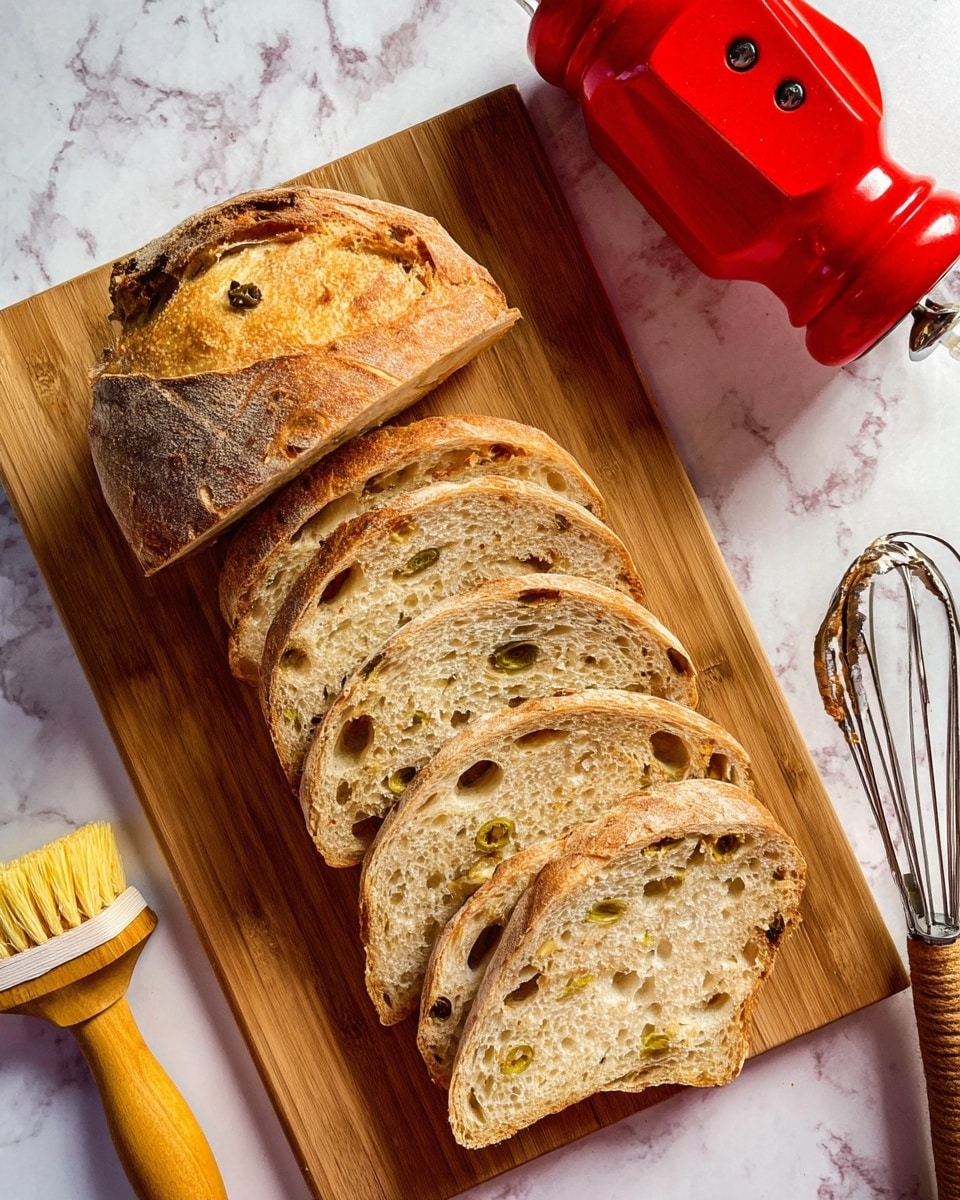
Dill Pickle Sourdough Bread offers a unique tangy twist on traditional sourdough, infusing the loaf with the bright, briny flavor of pickles. This rustic bread combines the rustic charm of rye and sourdough with the zesty surprise of diced dill pickles, making it a delightful treat for sandwich lovers and bread enthusiasts alike.
Ingredients
- 180 g warm water
- 150 g pickle juice
- 100 g active sourdough starter
- 400 g bread flour
- 100 g dark rye flour
- 5 g fine sea salt
- 150 g dill pickles, finely diced
- Flour for dusting work surfaces
- Rice flour for dusting (optional)
Instructions
- Step 1: In a large bowl, combine the warm water and pickle juice. Whisk in the active sourdough starter until mostly combined.
- Step 2: Add the bread flour and dark rye flour to the liquid mixture. Mix until a shaggy dough forms, then knead by hand until all flour is incorporated. Sprinkle the fine sea salt over the dough.
- Step 3: Cover the bowl and let the dough rest for 45 to 60 minutes.
- Step 4: Uncover the dough, wet your hands, and perform a stretch and fold by pulling one side of the dough until it stretches, then folding it over. Rotate the bowl 90 degrees and repeat this 4 times.
- Step 5: Cover the bowl again and rest for 30 minutes. Meanwhile, dice the dill pickles and wrap them in paper towels to remove excess moisture.
- Step 6: Add the diced pickles to the dough and perform a stretch and fold to incorporate them. Rest for another 30 minutes, then perform two more sets of stretch and folds, totaling four.
- Step 7: If the pickles make the dough too wet and hard to handle, generously flour your work surface and gently knead the dough until it comes together.
- Step 8: Cover the dough and set it aside in a warm place to bulk ferment for 2 hours.
- Step 9: Lightly flour your work surface and turn the dough out, placing the smooth side down and sticky side up to make shaping easier.
- Step 10: Fold the sides into the center, then roll the dough tightly from the bottom to form a batard, or tuck the ends under to shape a boule.
- Step 11: Let the shaped dough rest covered for 20 minutes.
- Step 12: Using your pinkies, place your hands under the dough and gently drag it across the surface to build surface tension without tearing it.
- Step 13: Dust the top of the dough with rice flour, then flip it seam side up into a banneton. Let it prove for 2 hours.
- Step 14: Cover the banneton with a reusable plastic bag and place it in the refrigerator for cold proofing. The dough will rise slowly during this time.
- Step 15: Preheat your oven to 450°F (232°C) with a Dutch oven or cloche inside.
- Step 16: Remove the dough from the fridge, invert it onto parchment paper, and score the top with a sharp blade or lame.
- Step 17: Carefully transfer the dough on the parchment into the preheated Dutch oven. Cover and bake for 30 minutes.
- Step 18: Remove the cover and bake for an additional 10 to 15 minutes until the crust is deep caramel brown and the internal temperature reaches 205–210°F (96–99°C).
- Step 19: Transfer the bread to a wire rack and allow it to cool completely for at least 2 hours before slicing to ensure the best texture.
Tips & Variations
- Use paper towels to absorb moisture from the pickles before adding them to prevent the dough from becoming too wet.
- Experiment with different types of pickles, like spicy or bread-and-butter varieties, for unique flavor profiles.
- If you don’t have a banneton, a bowl lined with a floured kitchen towel will work for proofing.
- Rice flour dusting helps prevent sticking without adding too much moisture or affecting the crust color.
Storage
Store the baked bread wrapped loosely in a paper bag or bread box at room temperature for up to 3 days. For longer storage, slice and freeze the bread, then toast slices directly from the freezer. Reheat in a warm oven to revive crust crispness and crumb softness.
How to Serve
Serve this delicious recipe with your favorite sides.
FAQs
Can I use regular vinegar instead of pickle juice?
Pickle juice provides a unique flavor and acidity that vinegar alone can’t replicate. Using vinegar may alter the taste, but you can substitute it in a pinch with a mild vinegar diluted with water.
What if my sourdough starter isn’t very active?
Make sure your starter is bubbly and has doubled in size before using. If it’s less active, extend the bulk fermentation time or give it a feed a few hours before starting your dough to boost activity.
PrintDill Pickle Sourdough Bread Recipe
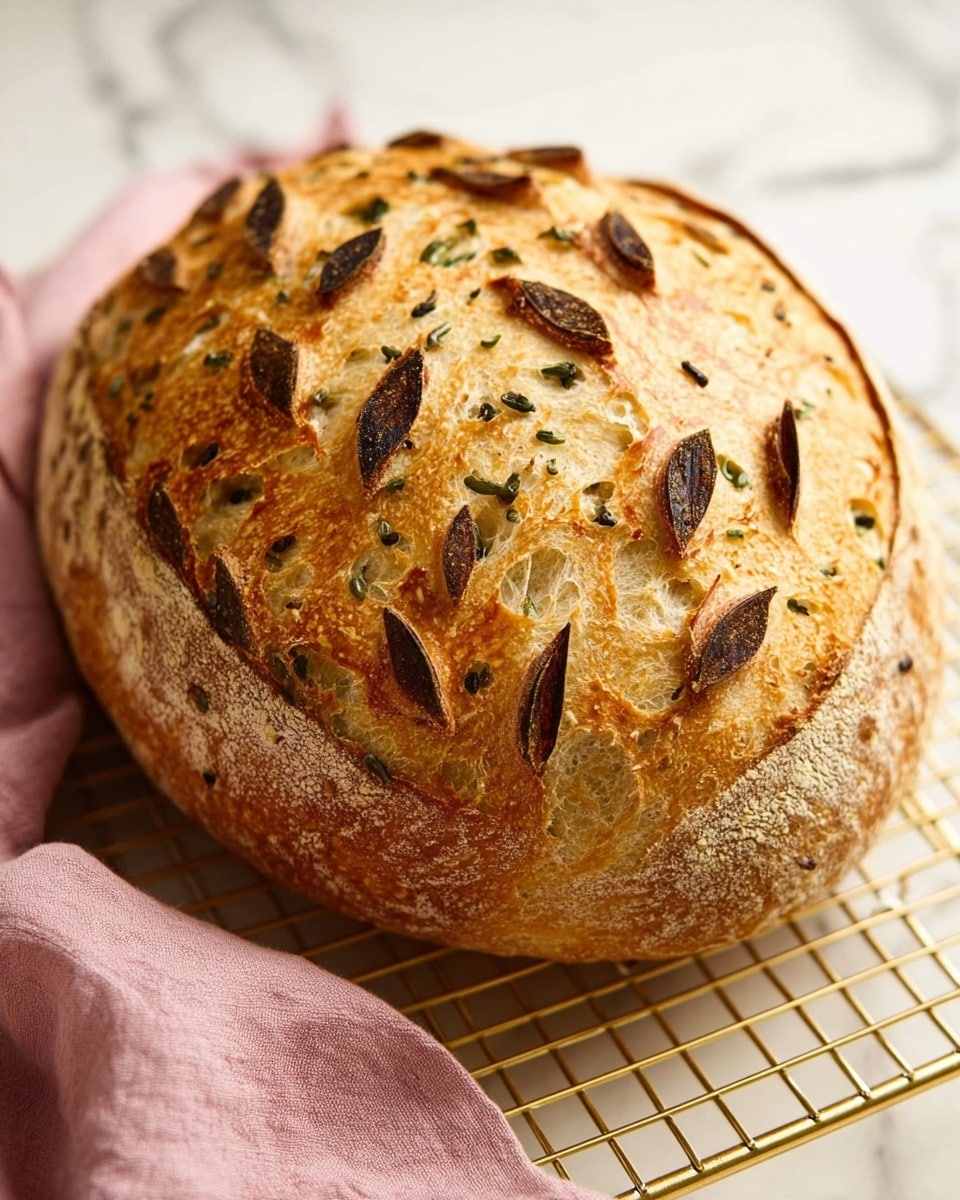
This Dill Pickle Sourdough Bread recipe combines tangy dill pickles and pickle juice with a classic sourdough base to create a flavorful, crusty loaf with a moist crumb. The inclusion of dark rye flour adds depth and complexity, while the methodical stretch and folds and cold proofing develop a beautiful texture and crust. Perfect for serving sliced with butter or as a sandwich bread, this loaf brings a delightful pickle twist to traditional sourdough baking.
- Prep Time: 30 minutes
- Cook Time: 45 minutes
- Total Time: 4 hours 15 minutes plus overnight cold proof
- Yield: 1 medium loaf (about 800–900 grams) 1x
- Category: Bread
- Method: Baking
- Cuisine: American
- Diet: Vegetarian
Ingredients
Liquid and Starter
- 180 g warm water
- 150 g pickle juice
- 100 g active sourdough starter
Flours and Salt
- 400 g bread flour
- 100 g dark rye flour
- 5 g fine sea salt
Inclusions
- 150 g dill pickles, finely diced
Other
- Flour for dusting work surfaces (preferably rice flour for final dusting)
Instructions
- Make the dough: In a large bowl, combine 180g warm water and 150g pickle juice. Whisk in 100g active sourdough starter until mostly combined. Add 400g bread flour and 100g dark rye flour, mixing until a shaggy dough forms. Knead with your hands to incorporate all flour. Sprinkle 5g fine sea salt over the dough.
- First rest: Cover the bowl and set aside for 45-60 minutes to allow the flour to hydrate.
- First stretch and fold: Using damp hands, grab the dough, stretch it until the flap is long enough to fold over itself, fold, rotate the bowl 90 degrees, and repeat 4 times. Cover and rest for 30 minutes.
- Prepare pickles: Dice 150g dill pickles finely and pat dry with paper towel to reduce excess moisture.
- Add pickles and subsequent stretch and folds: Add the diced pickles to the dough and perform the stretch and fold to incorporate them. Rest for 30 minutes, then perform 2 more sets of stretch and folds, totaling 4 sets. If pickles make dough wet and sticky, generously flour work surface and dough and gently knead to bring dough together.
- Bulk ferment: After the final stretch and fold, cover the bowl and allow the dough to bulk ferment in a warm place for 2 hours to develop flavor and gluten.
- Shape the dough: Lightly flour a work surface and turn the dough out with the smooth side down (sticky side up). Fold dough sides into the middle, then roll tightly from the bottom to form a batard or tuck ends under for a boule. Let rest covered for 20 minutes.
- Increase surface tension: Place your hands underneath the dough, use pinkies to apply gentle pressure, and drag the dough along the work surface to increase surface tension without tearing the dough.
- Proof in banneton: Dust top with rice flour, use a bench scraper to flip dough seam side up into a banneton. Cover and proof at room temperature for 2 hours.
- Cold proof: Cover the banneton with a reusable plastic bag and refrigerate overnight (or for the proving period) to slow fermentation and develop flavor.
- Preheat oven: Place a Dutch oven, cloche, or baking dish in the oven and preheat to 450°F (232°C).
- Prepare for baking: Remove dough from fridge, invert banneton onto parchment paper. Score dough with a lame or sharp knife—typically a deep curved slash works well for inclusions.
- Bake covered: Carefully remove the preheated Dutch oven, use parchment paper as a sling to transfer dough into it. Cover and bake at 450°F for 30 minutes.
- Bake uncovered: Remove the lid and bake uncovered at 450°F for an additional 10-15 minutes until crust is a rich caramel brown and internal temperature reaches 205-210°F.
- Cool: Remove loaf from Dutch oven and transfer to a wire rack. Cool completely for at least 2 hours before slicing to set crumb and texture.
Notes
- Make sure your sourdough starter is active and bubbly before beginning the recipe for best rise.
- Dicing the pickles finely and drying them helps prevent excess moisture from weakening the dough.
- Stretch and folds help develop gluten and evenly distribute inclusions without overworking the dough.
- Cold proofing enhances flavor complexity and improves dough handling.
- Using a Dutch oven traps steam for a crispy crust and better oven spring.
- Allow the bread to cool fully to avoid gummy texture in the crumb.
Keywords: Dill Pickle Sourdough Bread, sourdough bread, pickled bread, homemade bread, rye sourdough, fermented bread, crusty bread, artisan bread